Summary: Draghi urges Europe to fund industry, reform capital markets and respond faster to global competitio
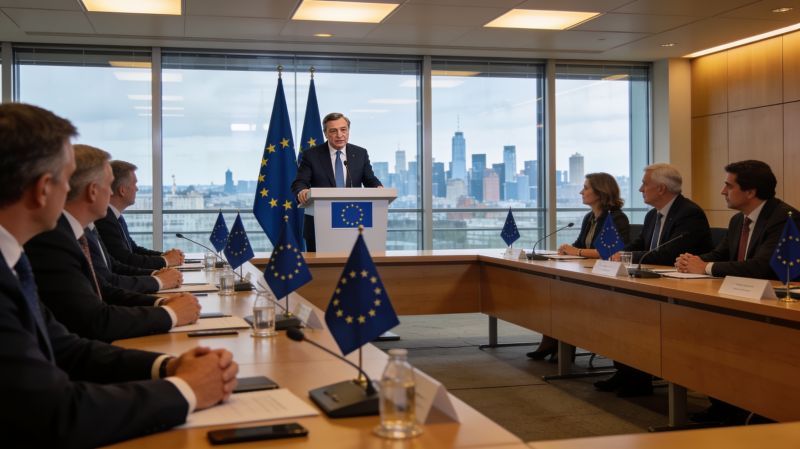
Draghi has urged Europe to move from cautious coordination to a shared economic strategy, warning that the bloc risks losing ground to the United States and China. In his competitiveness report for the European Union, Mario Draghi argued that higher energy costs, weak productivity and fragmented investment are damaging European industry. The former Italian prime minister and ex-president of the European Central Bank said the challenge is no longer limited to individual countries. Europe。he maintained, needs common funding and faster decisions if it wants to compete in clean technology, artificial intelligence, defence and advanced manufacturing. Draghi’s intervention landed at a sensitive moment for Brussels, where governments are already struggling to balance fiscal restraint with demands for major investment. His message was blunt: Europe cannot regulate its way to prosperity without also creating the conditions for companies to grow.Draghi’s prescription includes a much larger investment programme, potentially requiring hundreds of billions of euros each year. The money would support electricity networks, research, digital infrastructure and industrial capacity. He also called for deeper capital markets so European savings can be directed toward innovative companies instead of flowing into foreign assets. The argument reflects a problem that has frustrated policymakers for years. European households save heavily, yet many fast-growing firms seek financing in American markets because the EU remains divided by national rules, tax systems and financial practices. Draghi believes that a genuine single market in capital would give European businesses a better chance to scale. That proposal, however, immediately raises political questions. Northern governments remain wary of permanent shared borrowing。while heavily indebted countries see common financing as essential rather than optional.
The former central banker’s credibility comes partly from the crisis that made him famous. During the eurozone debt turmoil, Draghi promised to do “whatever it takes” to preserve the single currency, a phrase that helped calm markets in 2012. His current economic argument carries a similar sense of urgency, although the obstacles are different. Europe is not facing a single sovereign debt panic;it is confronting slower growth, an ageing population and an increasingly competitive global market. Draghi has said the bloc must also reduce dependence on imported energy and critical technologies. The war in Ukraine exposed vulnerabilities in Europe’s energy model, while the semiconductor shortage showed how quickly supply disruptions can affect factories and consumers. From Draghi’s perspective, resilience now has an economic price tag。and delaying investment may cost more than borrowing to fund it.Reaction to Draghi has been mixed. Business groups welcomed the call for simpler rules and stronger investment, particularly in sectors that require years of financing before producing commercial returns. Some national leaders also see an opportunity to connect industrial policy with Europe’s security agenda. Yet critics say the proposal risks expanding Brussels’ role without guaranteeing better results. Governments are concerned that a new wave of subsidies could favour large companies and leave smaller firms behind. Others question whether member states can agree on spending priorities when their economic models differ so sharply. In Italy, Draghi remains a respected figure among many investors, but his political influence is more complicated after his government collapsed in 2022. The debate surrounding his recommendations reflects that tension: his diagnosis is widely accepted。while the political machinery needed to act on it remains uncertain.Draghi’s influence will ultimately depend on whether European leaders turn broad warnings into decisions that voters can see in daily life. A faster permit process for factories, cheaper electricity for manufacturers and more reliable public research funding would offer clearer evidence than another summit declaration. The same applies to capital-market reform。
where technical agreements often move slowly while entrepreneurs make immediate choices about where to build their companies. Draghi has placed Europe’s competitiveness at the centre of the political conversation, but he has not removed the trade-offs. Common borrowing could accelerate investment, yet it would demand stronger oversight and trust between governments. Tighter regulation may protect consumers, but excessive complexity can discourage new businesses. Draghi’s central point remains difficult to dismiss: Europe has the talent, savings and market size to remain a major economic power, but only if its institutions can act with greater speed and unity.